Maritime with Ezinne
By Ezinne Azunna
A weekly column on Africa’s Blue Economy and maritime development, with attention to how ports, coastal infrastructure, and policy decisions interact with the lived realities of communities along the continent’s coastlines, published by Maritime TV Africa.
Let me begin by thanking everyone who reached out with feedback on last week’s column, Forgotten Archives and Uncounted Value Beneath Africa’s Waters. The conversation it sparked was thoughtful, and has in many ways, shaped this week’s reflection.
Many readers pointed to the practical challenges of underwater exploration in Africa: limited access to advanced survey technologies, a shortage of trained marine archaeologists and surveyors, and the environmental realities of many of our waters. Others raised something more fundamental: that before technology, funding, or partnerships, there must first be a shared recognition that underwater heritage is worth searching for, studying, and preserving.
One discussion in particular centred on decommissioned naval vessels and the decisions made about their fate-whether they are preserved, repurposed, or reduced to scrap. How naval vessels are decommissioned offer a useful illustration. Traditionally, a ship at the end of its service life is either sold, scrapped, or, in some cases, deliberately sunk. Where sinking is used, it is often framed as a controlled environmental or operational decision, carried out in line with international conventions and protocols -sometimes to create artificial reefs, sometimes for training purposes, and at other times simply as a cost-effective means of disposal.
Even in this process, something subtle is revealed: a shift in how value is defined once a vessel leaves active service. What was once a floating archive of national operations, personnel, and strategic history can quickly be reduced to either recyclable material or underwater structure. In that transition, documentation is often less visible than disposal.
Oral accounts also point to the MV Vallin, which some local narratives associate with Nigeria’s first presidency in the early post-independence period, before it was reportedly repurposed as a waterfront restaurant along Marina. Those who grew up around the area, and with whom I spoke while producing a documentary on Ehingbeti, referred to it as the “Floating Bukka.” Its later fate is no longer clearly documented in accessible public records.
It is precisely here that the importance of oral history becomes clear. If we exclude it from maritime inquiry, we weaken one of the few remaining entry points into fragmented or incomplete histories. Oral accounts do not replace archival records, but they often point to where memory, meaning, and material traces intersect. For historians, this is critical in building the mental architecture that must precede excavation- because what is remembered often determines what is later searched for.
In this sense, history does not present a single face. It presents multiple, sometimes overlapping interpretations of the same object, vessel, or space, each offering a different route into investigation. Oral history, therefore, is not an alternative to evidence; it is often the beginning of where evidence is sought. In maritime spaces, invisibility is not absence, it is often history waiting to be recovered.
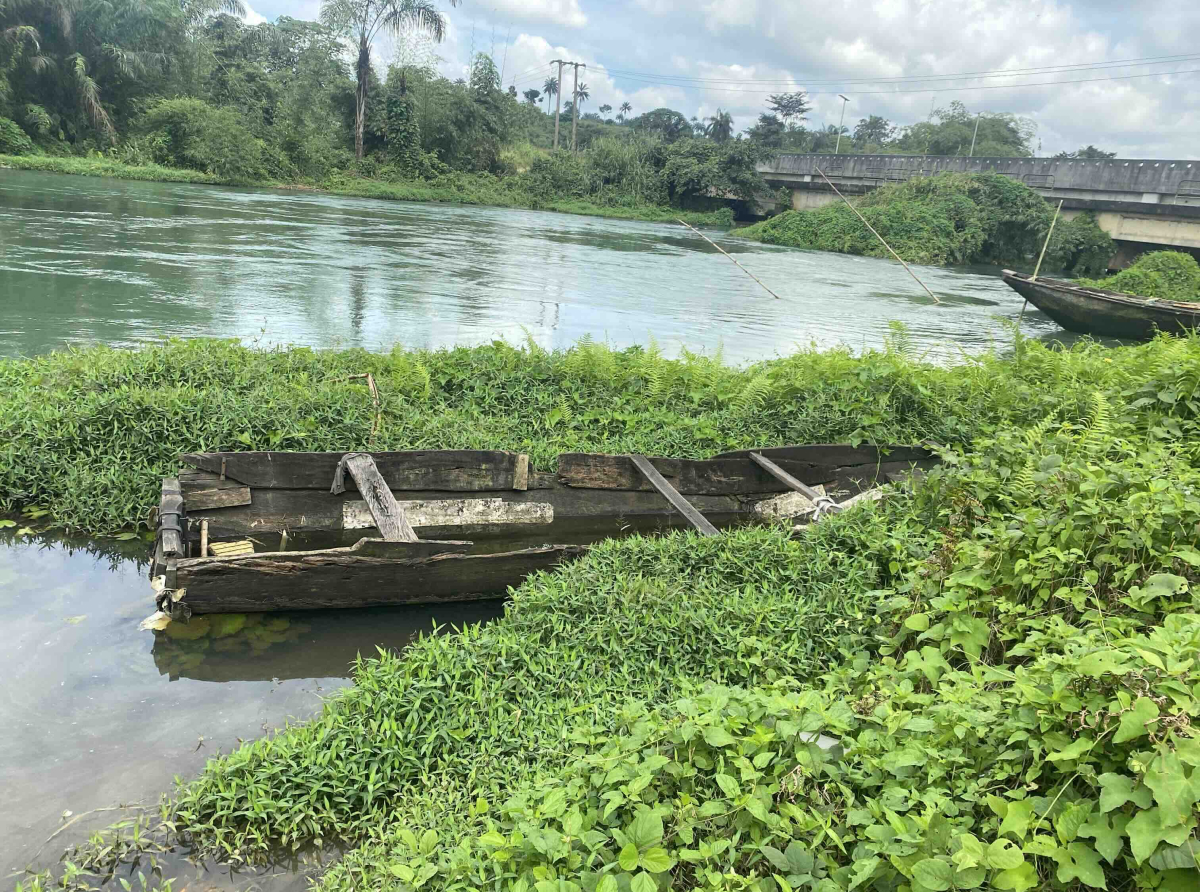
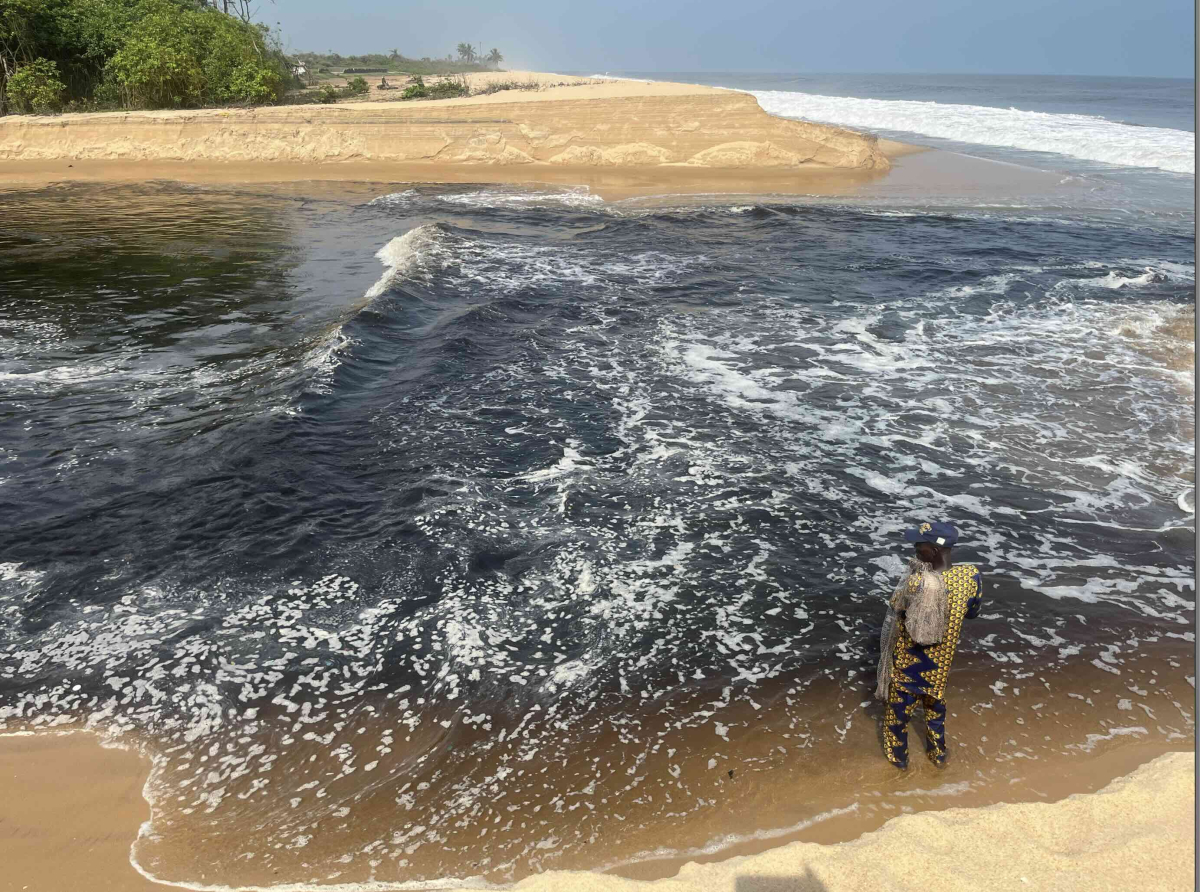
A recurring concern raised by readers is the challenge of murky, sediment-laden brackish waters- such as those found in Lagos and parts of the Niger Delta- where freshwater and seawater mix, creating low-visibility conditions beneath the surface. Yet this is not unique to Africa. Estuaries, deltas, lagoons, and coastal wetlands around the world share similar characteristics.
UNESCO guidance and established underwater archaeology practice show that such conditions do not prevent investigation, instead, they require appropriate tools and methods, including side-scan sonar, multibeam echo sounders, magnetometers, and remotely operated vehicles (ROVs).
The Mississippi Delta in the United States, the Thames Estuary in the United Kingdom, and parts of the Baltic and North Seas present similar environmental conditions- brackish waters, heavy sedimentation, and low visibility. Yet major underwater archaeological investigations have been successfully carried out in these environments. Visibility, therefore, is not the end of the conversation.
That said, the next argument is often cost- the adoption of modern technologies in a field still widely perceived in Africa as largely unprofitable. But on closer reflection, the greater challenge comes even before cost: the recognition of underwater heritage as a matter of national value. Globally, countries that have made significant progress in underwater archaeology did not begin with full capacity. They began with institutional recognition.
Egypt’s submerged heritage off Alexandria gained global significance only after state-backed frameworks enabled collaboration with international archaeologists. South Africa’s approach, through its heritage agency, created regulatory conditions for controlled exploration. The United Kingdom and the United States integrated underwater heritage into national museum systems, research institutions, and broader marine policy frameworks. In each case, policy came first. Capacity followed.
These examples are not offered as templates to copy, but as reminders of what becomes possible when underwater heritage is recognised as part of national identity and knowledge systems. Egypt did not begin with discovery; it began with recognition, then partnership, and then structured exploration.
Africa’s maritime geography is historically dense. The Bight of Benin, the Bight of Bonny, the Niger Delta, the Lagos Lagoon, and coastal corridors across West and Central Africa carry centuries of movement-trade, migration, fishing economies, colonial port systems, and maritime conflict. These are not abstract histories. They should not remain largely absent from planning systems.
Underwater heritage must be formally recognised within national Maritime and Blue Economy strategies- as a distinct category of cultural and scientific value. This would allow it to enter budgetary planning, inter-agency coordination, and international cooperation frameworks.
Institutional responsibility must also be clearly defined. Whether within maritime authorities, museums commissions, or heritage agencies, there must be a designated unit responsible for underwater cultural heritage mapping, protection, and research coordination.
Baseline surveys must precede large-scale maritime development projects. Port expansion, dredging, offshore energy development, and coastal infrastructure cannot proceed without at least preliminary heritage risk mapping.
Partnerships must be structured rather than incidental. Universities, naval hydrographic units, international archaeology institutes, and private-sector survey companies already possess overlapping capabilities. What is missing is a framework that brings them into coordinated engagement.
I am not calling for an immediate large-scale excavation. What we need is structured knowledge-building. Our first step is not recovery-it is documentation. And documentation begins with recognition.
There is also an economic dimension that cannot be ignored. When properly integrated, underwater heritage contributes not only to historical knowledge but also to tourism development, marine biodiversity studies, museum economies, education systems, and cultural identity.
We cannot fully develop tourism, the arts, or even effectively teach history without engaging marine archaeology. Our historians must be deliberately brought into the conversation- naval historians, port historians, colonial history experts, and marine archaeologists working together to interrogate what may lie beneath our waters.
Again, the first step is not the dive, it is the design of a shared intellectual framework-a mental architecture that allows us to anticipate, imagine, and begin to understand what we are likely to encounter before any physical exploration begins.
Every nation must first decide that what lies underwater is worth remembering.
Maritime with Ezinne is a weekly reflection on Africa’s Blue Economy, maritime development, and the human stories that shape them.